Fire protection systems are among the most critical services in any building. They must work on the one day they are needed, often after years of standing idle. That is why their design follows recognised standards—most commonly the NFPA codes, which are used in the United States and on many international projects, and the EN standards across Europe—alongside local regulations and insurer requirements.
The Key Standards
- NFPA 13: Installation of sprinkler systems.
- NFPA 14: Standpipe and hose systems.
- NFPA 20: Stationary fire pumps.
- NFPA 72: Fire alarm and signaling systems.
- NFPA 25: Inspection, testing and maintenance of water-based systems.
- EN 12845: Design, installation and maintenance of automatic sprinkler systems.
- EN 54: Fire detection and fire alarm systems.
- FM Global data sheets: Insurer guidance that is often applied to industrial and storage facilities.
The governing standard is usually set by local legislation, the authority having jurisdiction, the client and the insurer. Mixing rules from different standards within one system should be avoided; whichever design basis is chosen should be applied consistently.
Step 1: Classify the Hazard
Every sprinkler design starts with understanding what is being protected. NFPA 13 classifies occupancies as Light Hazard, Ordinary Hazard (Groups 1 and 2) and Extra Hazard (Groups 1 and 2), with separate rules for storage. EN 12845 uses Light Hazard (LH), Ordinary Hazard (OH1 to OH4) and High Hazard classes for processes (HHP) and storage (HHS). The hazard class determines the design density, the assumed area of operation, sprinkler spacing and the required water supply duration.
Step 2: Lay Out the System
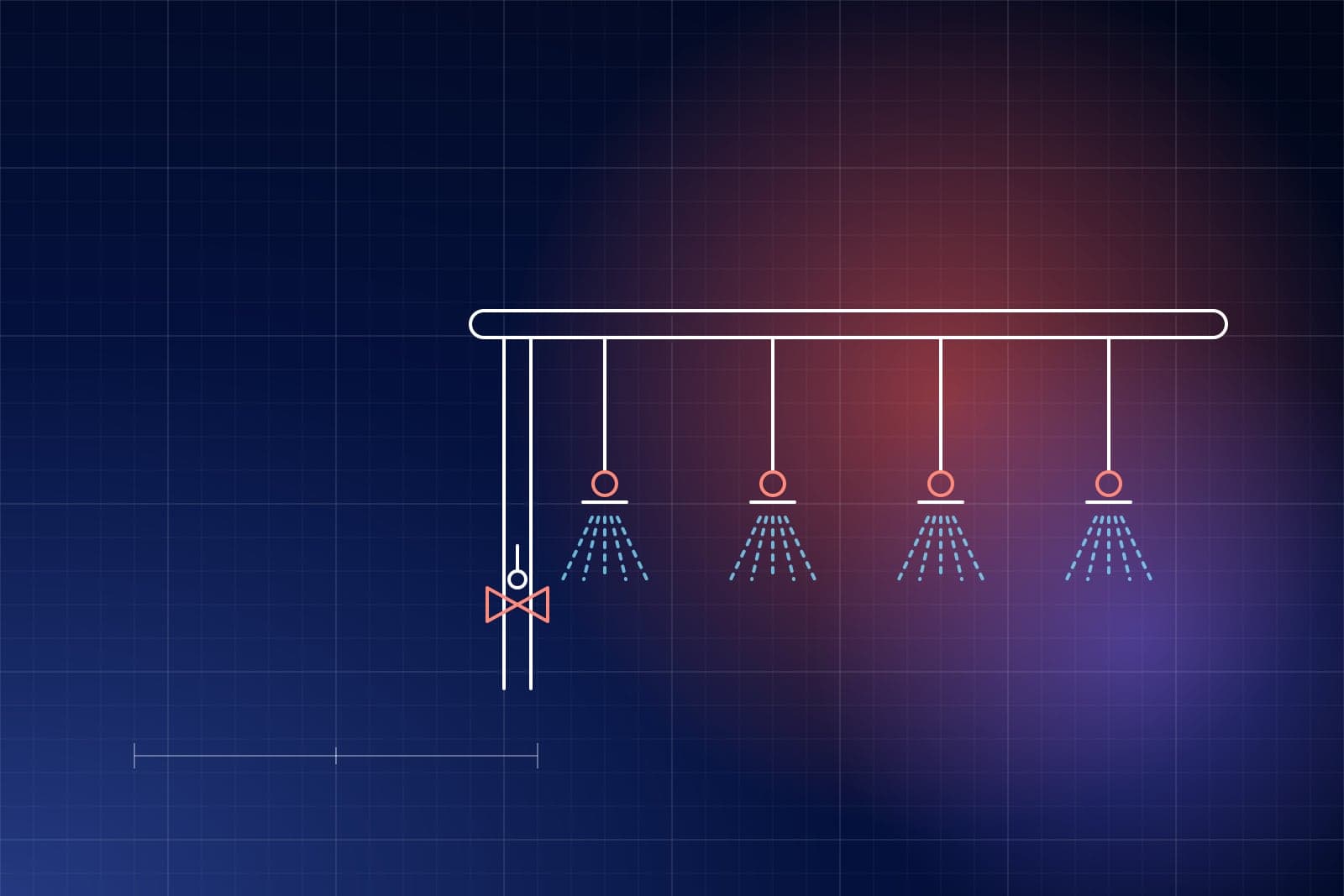
With the hazard defined, the designer selects the system type—wet, dry, pre-action or deluge—and lays out sprinkler heads, branch lines, mains and risers. Head spacing, distances from walls, obstructions such as beams and ducts, and the position of control valves must all comply with the selected standard.
Step 3: Run the Hydraulic Calculations
Hydraulic calculations prove that the system can deliver the required flow and pressure to the most hydraulically demanding area. Pipe friction losses are typically calculated with the Hazen–Williams method, and the results determine pipe sizes and the duty point of the fire pump. Calculations should be repeated whenever the layout changes during coordination.
Step 4: Secure the Water Supply
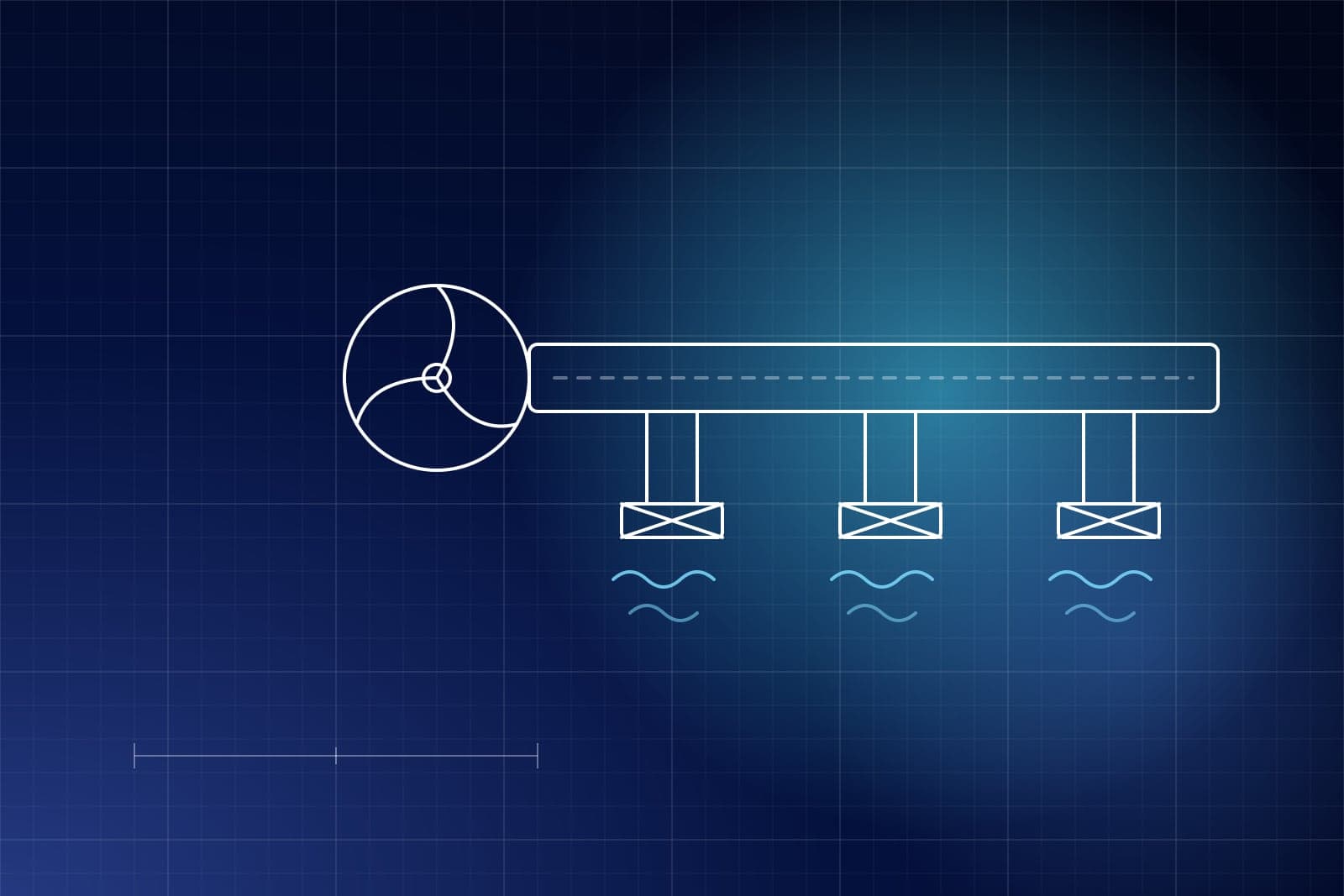
The water supply must meet the system demand for the full required duration. Depending on the project, this may involve a connection to the public network, fire water storage tanks, and electric or diesel fire pumps with a jockey pump to maintain system pressure. Pump rooms need adequate ventilation, drainage and space for testing and maintenance.
Coordination With Other Systems
Fire protection does not work in isolation. Sprinkler pipework must be coordinated with ductwork, cable trays and the structure; alarm valves and flow switches must be connected to the fire alarm system; and smoke control, fire dampers and HVAC shutdown sequences must work together. MEP 3D coordination helps resolve these interfaces before installation.
Best Practices
- Confirm the design basis early: Agree the governing standard and insurer requirements before layout begins.
- Design for future use: Storage heights and commodities often change, so allow reasonable flexibility.
- Keep calculations up to date: Re-run hydraulic calculations after every significant layout change.
- Plan for testing and maintenance: Provide test connections, drains and safe access to valves.
- Document everything: Clear drawings, calculations and specifications make approvals and handover faster.
Conclusion
Well-designed fire protection systems start with a correct hazard assessment and are proven by sound hydraulic calculations. Applying NFPA or EN standards consistently—and coordinating them with the rest of the MEP design—delivers systems that protect people and property when it matters most.